
Print farm procurement guide
Bulk Filament for Print Farms: Samples, Batch Checks & Reorders
Buying bulk filament for print farms is an operating decision as well as a price comparison. Your printers need a repeatable material profile, the right spool format and enough stock for the next production cycle. This WJ guide turns those needs into a sample approval record, batch acceptance plan and replenishment brief. It is designed for farms that want to compare an OEM or wholesale supply proposal before committing to a larger order.
Quick answer for buyers
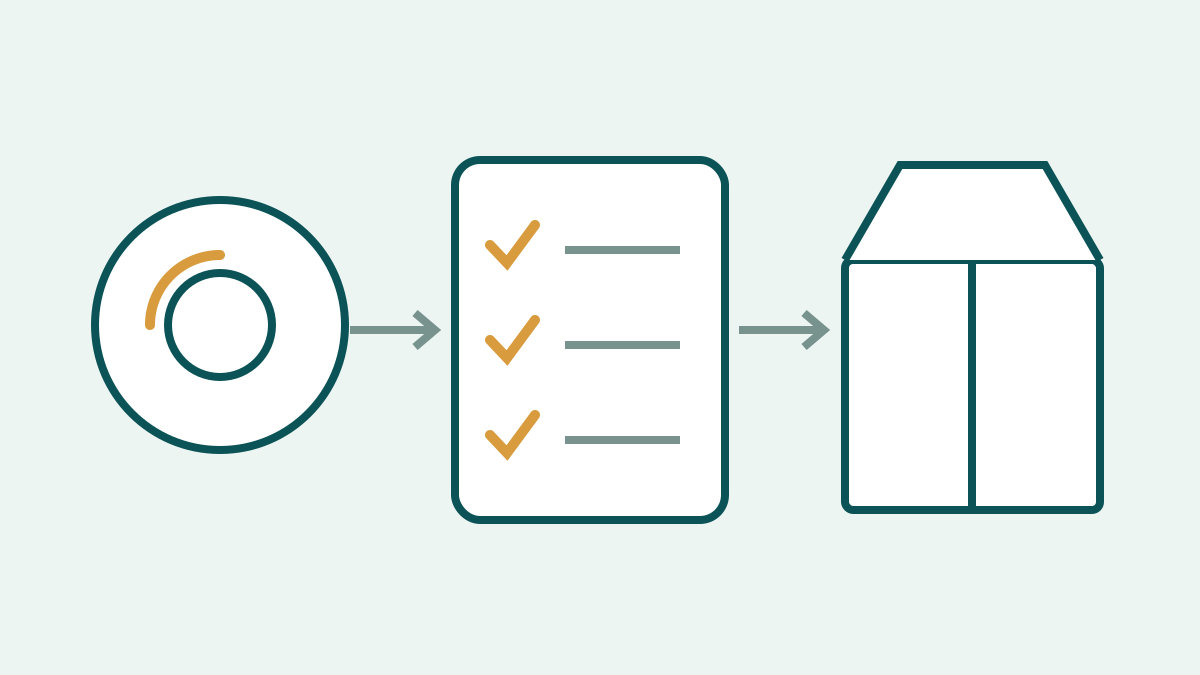
For bulk filament procurement, define demand by exact grade and color, evaluate samples on representative printers, agree batch and packaging checks, and compare compatible spool formats before planning reorders. WJ publishes grade-specific material data and offers OEM packaging inquiries. Confirm quantity, color, spool, label, packaging, destination, sample charges and replenishment timing with WJ; pricing and lead time depend on the reviewed order.
1. Forecast kilograms by grade and color
Start with actual material use from your job records. Separate PLA Basic, PETG Basic and specialty grades instead of combining every spool into a single monthly total. Also separate high-turnover colors from occasional jobs; stock that cannot serve the next order does not protect that job from a shortage.
Estimate consumed material from slicer forecasts and measured use, including supports, purge waste, failed parts and restart allowance. Use scheduled orders and recent consumption to prepare a realistic first purchase. Keep approved grade, color reference, expected kilograms and target use date in one procurement sheet.
- List printer and feed-system models, nozzle sizes and typical job duration.
- Identify recurring parts, appearance requirements and functional acceptance checks.
- Separate the initial trial quantity from expected monthly and peak demand.
- Name delivery destination and the date material must be available at the farm.
2. Approve a sample before scaling the order
Evaluate the exact proposed grade and color on representative machines, including any feed system used across the farm. Keep the TDS version, sample or batch identifier, printer, nozzle, slicer profile, drying treatment and test geometry with the result. An attractive sample photograph alone is not a repeatable production specification.
The WJ PLA Basic and PETG Basic V1.0 sheets, issued August 1, 2026, provide grade-specific processing and reference data. Use the linked documents to choose a starting profile, then test your actual part. A TDS describes a grade; it is not an independent batch certificate or a guarantee of finished-part performance.
Define limits before testing. Approve appearance with a physical color reference or agreed master sample, then evaluate fit and the functional criteria relevant to the part. Record changes needed to reach the approved profile. Confirm sample charges and shipping arrangements with WJ before requesting a trial.
| Check | Record | Decision |
|---|---|---|
| Feed and spool fit | Printer, feeder, holder and spool dimensions | Pass without feed interference |
| Print profile | TDS version, drying, printer, nozzle and slicer settings | Repeat the approved setup |
| Part result | Appearance, dimensions and application checks | Meet agreed sample limits |
| Color and identification | Master reference, grade, color and lot | Traceable approved comparison |
| Pack and weight | Seal, desiccant, net weight and labels | Match the written order |
3. Turn batch consistency into agreed checks
“Consistent” needs a measurable definition. Agree what will be checked on incoming stock and on a repeat order: exact grade and color, net filament weight, spool fit, seal condition, identification and the print checks used for sample approval. Specify the sampling plan and how an exception will be reported.
Retain an approved reference and compare a planned sample from a new lot under the same conditions. Keep packaging damage and printing results connected to the lot identifier. A few diameter readings or a single successful part cannot establish the condition of an entire shipment. Ask about batch-specific inspection records if your purchasing process requires them.
Do not assume footage of winding or packing proves a particular lot met your acceptance criteria. WJ factory articles provide process context; order-specific checks and documentation should be agreed separately.
4. Compare 1 kg and 3 kg spools on the actual feed system
More filament on a spool can reduce the number of spool changes for the same nominal material requirement, but the larger format must fit your setup. Check outer diameter, width, hub opening, holder capacity, clearance and feed resistance at different remaining weights. Confirm net filament weight separately from gross weight including the spool.
A 3 kg spool is not automatically compatible with an enclosed multi-material feeder or every printer holder. Evaluate routing, an external holder if needed, and the dryer or drybox space. For low-volume colors, smaller spools may make handling and storage easier. The best format depends on the jobs and equipment rather than one universal choice.
WJ’s 3 kg production article supplies manufacturing context. Confirm availability for the selected grade, color and packaging with WJ and request the proposed spool dimensions before purchase.
5. Set a reorder trigger rather than waiting for the last spool
Use a documented planning rule: reorder point = expected daily consumption × replenishment time + safety stock. For this calculation, replenishment time includes the stages needed to make material available to print: order review, any production, transport, receiving and required acceptance checks. Agree the actual schedule with the supplier and logistics partner.
Illustrative planning example: a farm expects to use 30 kg per day of one grade/color, assumes 21 days of total replenishment time and holds 150 kg as a buffer. The reorder point is 30 × 21 + 150 = 780 kg. These are example assumptions, not a promised lead time or a recommended buffer for every farm.
Compare that trigger with inventory position: usable stock on hand + confirmed incoming supply − quantities already allocated to jobs. Do not count quarantined or damaged spools as usable. Review the calculation when demand, delivery performance or the job mix changes, and coordinate incoming batch approval before switching active production.
6. Compare delivered cost and production results
Compare quotes for the same grade, color mix, net quantity, spool and packaging specification. Add freight, duties or taxes where applicable, handling and local delivery under the agreed terms. Divide the comparable delivered total by the net filament kilograms to evaluate the purchasing cost.
For your operation, also record failed-print material, operator time, spool changes and accepted output during the trial. These records help assess production cost without inventing a universal savings claim for one spool or supplier. A lower unit price is useful only when the proposed supply works for the job.
WJ’s public custom-color MOQ is 100 kg per color. That applies to custom colors; it is not a stated minimum for every stock-color or mixed-color purchase. Ask for the applicable order quantity, sample costs, pricing, payment and shipping terms for your request. Free samples, fixed discounts and dedicated support plans require explicit confirmation.
7. Send WJ a brief that can become a quote
Send the approved material and color references, initial quantity, forecast by grade/color, proposed spool dimensions or equipment constraints, and destination. Add labels, cartons, protective packaging, the sample test record and the batch acceptance requirements you want to retain for reorders.
State the target arrival date and ask for a reviewed supply schedule rather than assuming an immediate repeat shipment. If you plan to sell under your own brand as well as use material internally, identify that OEM packaging requirement separately. Confirm the quote scope in writing before ordering.
Procurement notes
| Demand | Initial quantity and recurring kilograms by exact grade and color. |
|---|---|
| Printer & spool | Printer/feed-system model, spool format and dimensions, drying requirements. |
| Approval | Sample record, color reference and proposed batch acceptance plan. |
| Delivery & OEM | Destination, arrival target, labels, cartons and protective packaging. |